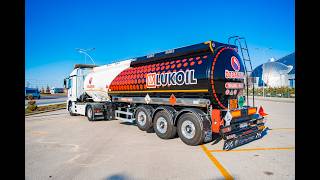
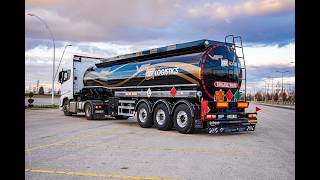
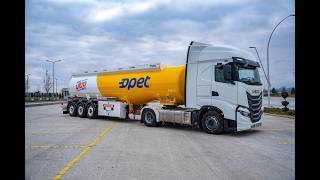
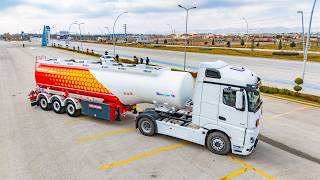
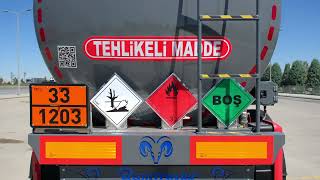
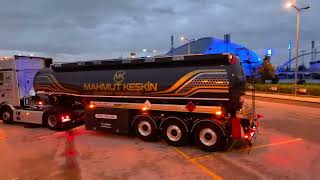
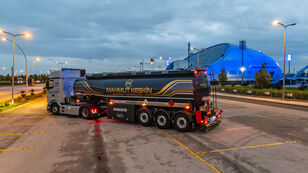
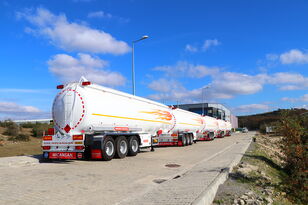
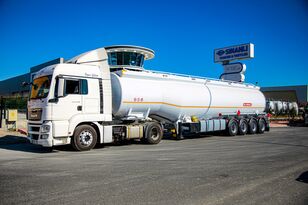
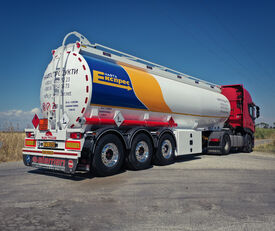
New Ram Treyler 2026 fuel tank semi-trailer






If you decide to buy equipment at a low price, make sure that you communicate with the real seller. Find out as much information about the owner of the equipment as possible. One way of cheating is to represent yourself as a real company. In case of suspicion, inform us about this for additional control, through the feedback form.
Before you decide to make a purchase, carefully review several sales offers to understand the average cost of your chosen equipment. If the price of the offer you like is much lower than similar offers, think about it. A significant price difference may indicate hidden defects or an attempt by the seller to commit fraudulent acts.
Do not buy products which price is too different from the average price for similar equipment.
Do not give consent to dubious pledges and prepaid goods. In case of doubt, do not be afraid to clarify details, ask for additional photographs and documents for equipment, check the authenticity of documents, ask questions.
The most common type of fraud. Unfair sellers may request a certain amount of advance payment to “book” your right to purchase equipment. Thus, fraudsters can collect a large amount and disappear, no longer get in touch.
- Transfer of prepayment to the card
- Do not make an advance payment without paperwork confirming the process of transferring money, if during the communication the seller is in doubt.
- Transfer to the “Trustee” account
- Such a request should be alarming, most likely you are communicating with a fraudster.
- Transfer to a company account with a similar name
- Be careful, fraudsters may disguise themselves as well-known companies, making minor changes to the name. Do not transfer funds if the company name is in doubt.
- Substitution of own details in the invoice of a real company
- Before making a transfer, make sure that the specified details are correct, and whether they relate to the specified company.
Seller's contacts


 26,000 kg
Net weight
26,000 kg
Net weight
 7,000 kg
Turkey
7,000 kg
Turkey


 10,000 kg
Turkey
10,000 kg
Turkey


 14,500 kg
Turkey, Kartepe/Kocaeli
14,500 kg
Turkey, Kartepe/Kocaeli


 26,000 kg
Net weight
6,200 kg
Turkey, Kartepe/Kocaeli
26,000 kg
Net weight
6,200 kg
Turkey, Kartepe/Kocaeli


 Turkey, DILOVASI / KOCAELI


 Turkey, Konya


 Turkey, Konya


 Turkey, DILOVASI / KOCAELI


 Turkey, Konya


 Turkey, Antakya/Hatay


 Turkey, Konya

 Turkey, Konya

 Turkey, DILOVASI / KOCAELI


 Turkey, Konya

 Turkey, Konya


 Turkey, DILOVASI / KOCAELI


 Turkey, Konya

 35,000 kg
Net weight
6,100 kg
Turkey, Antakya/Hatay
35,000 kg
Net weight
6,100 kg
Turkey, Antakya/Hatay


 40,000 kg
Net weight
8,500 kg
Turkey, Karatay / Konya
40,000 kg
Net weight
8,500 kg
Turkey, Karatay / Konya
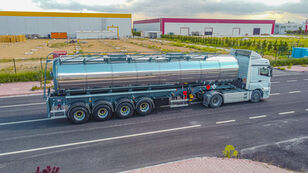
The RAM Trailer 36,000-litre aluminium fuel tanker semi-trailer
is engineered for safe, efficient and reliable transportation of petroleum
products. Its lightweight aluminium construction helps reduce the empty vehicle
weight and may provide increased payload potential within applicable legal
weight limits.
Each tanker can be configured according to the customer's operational
requirements, the intended cargo, destination-country regulations and requested
certification standards. Compartment layout, loading system, discharge
equipment, axle configuration and accessories can be customised during the
engineering stage.
Key Advantages of the 36,000 L Aluminium Fuel Tanker
Lightweight aluminium tank construction
High payload potential within legal vehicle limits
Corrosion-resistant tank body
Customisable compartment configuration
Top-loading and bottom-loading options
Gravity, pump, manifold and metered discharge options
ADR-compliant design options
Different axle, suspension and braking system alternatives
Equipment configurations suitable for export markets
Easy maintenance and operator-friendly design
Technical Specification
Product Type Aluminium Fuel Tanker Semi-Trailer
Nominal Tank Capacity 36,000 litres
Tank Material High-strength aluminium alloy
Overall Length Approximately 11,200 mm, subject to final configuration
Overall Width Approximately 2,550 mm, subject to destination-country regulations
Axle Distance Approximately 6,300 mm, subject to axle configuration
Number of Compartments Configured according to customer requirements
Loading System Top-loading, bottom-loading or combined configuration
Discharge System Gravity, pump, manifold and metered delivery options
Chassis Engineered according to load, route and operating conditions
Axles and Suspension Brand and configuration options according to customer preference
Braking System ABS and EBS options according to the target market
Certification ADR-compliant production options according to project requirements
Important: Dimensions, tare weight, compartment arrangement, axle configuration
and installed equipment may vary according to the approved project. Final
specifications are defined in the technical quotation and order confirmation.
Why Choose an Aluminium Fuel Tanker?
Aluminium has a lower density than conventional steel materials. For this
reason, an aluminium tanker can offer a lower empty weight, depending on its
final design and equipment configuration. A lower tare weight may allow the
operator to transport a higher payload while remaining within applicable legal
vehicle limits.
This advantage can be particularly valuable for long-distance fuel distribution,
high-frequency delivery operations and transport companies focused on reducing
operating costs per delivered litre.
Aluminium also provides strong resistance to corrosion. When the tanker is used
with compatible products, maintained correctly and cleaned according to
appropriate procedures, it can provide a long and reliable operating life.
Custom Compartment Design
The tank body can be manufactured with multiple independent compartments.
Compartment quantity and individual compartment capacities are determined
according to the customer's distribution plan and the types of products to be
transported.
A multi-compartment design may enable different petroleum products to be
transported during the same delivery route. It can also support controlled
unloading at several delivery points.
Custom compartment volumes
Manholes and valves for each compartment
Internal baffles and surge-control design
Leak-testing and production quality controls
Upper walkway and access ladder options
Separate discharge lines upon request
Fuel Loading Systems
The tanker can be equipped for top loading, bottom loading or a combined loading
configuration. The correct system is selected according to terminal
infrastructure, destination-country requirements and the customer's operating
procedures.
Bottom-Loading Equipment Options
Bottom-loading adapters
API couplings
Emergency foot valves
Overfill-prevention system
Vapour-recovery connections
Pneumatic control system
Interlock and safety-control options
Fuel Discharge Systems
The discharge system can be designed according to the delivery operation. Fuel
may be discharged by gravity or transferred through a pump, manifold and metering
system.
Available Discharge Configurations
Gravity discharge
Pump-assisted discharge
Manifold discharge system
Mechanical or electronic metering system
Hose reel and delivery hose options
Separate product lines
Cabinet-mounted discharge equipment
Optional Equipment
Fuel transfer pump
Mechanical or electronic flow meter
Loading and discharge manifold
Hose reels and hose-storage tubes
Vapour-recovery system
Overfill-prevention system
Grounding reel and grounding equipment
Fire-extinguisher cabinets
Toolboxes and equipment cabinets
Rear and side protection systems
LED lighting and marker lamps
Spare-wheel carrier
Stainless-steel or aluminium equipment cabinets
Custom branding and reflective markings
ADR-Compliant Fuel Tanker Design
Fuel tanker safety depends on the complete system, including the tank body,
internal partitions, manholes, valves, piping, braking equipment, electrical
installation and emergency-control components.
RAM Trailer can engineer the tanker according to the requested ADR scope,
intended petroleum product, required tank code and destination-country
regulations. The applicable certification and inspection process must be defined
at the beginning of the project.
Final ADR approval depends on the approved technical design, selected equipment,
production controls, inspections, testing procedures and the authorised
certification organisation involved in the project.
Safety Equipment Options
Emergency shut-off valves
Overfill sensors
Vapour-recovery connections
Grounding system
Fire-extinguisher cabinets
Hazard and reflective markings
Anti-slip upper walkway
Protective side and rear structures
Secure access ladder
Operational warning labels
Chassis, Axles and Suspension
The chassis and running gear are selected according to the tank capacity, legal
axle loads, road conditions and the operating region. Different axle,
suspension and brake-system brands may be offered depending on availability and
customer preference.
Three-axle semi-trailer configuration
Air-suspension options
ABS and EBS braking-system alternatives
Lift-axle and self-steering axle options where technically suitable
Heavy-duty landing legs
Tyre and rim alternatives for the target market
Manufacturing and Quality-Control Process
Review of the customer's transport and operational requirements
Definition of the intended product and destination market
Engineering of the tank, compartments and installed equipment
Material preparation and tank-body production
Welding and structural assembly
Installation of the chassis, axles, suspension and braking systems
Installation of piping, valves, pump and auxiliary equipment
Leak-testing and functional controls
Final inspection and preparation for delivery
Applications
The 36,000-litre aluminium fuel tanker semi-trailer can be configured for a wide
range of petroleum transport and distribution operations.
Fuel-distribution companies
Petrol-station supply operations
Oil and energy companies
Transport and logistics fleets
Industrial facilities
Mining and construction operations
Airport fuel-supply projects
Fleet-refuelling operations
Remote fuel-distribution projects
Custom Engineering for Export Markets
Tanker requirements vary between countries. Legal dimensions, axle loads,
electrical components, braking systems, connection standards and certification
requirements may differ from one market to another.
RAM Trailer can configure the tanker according to the destination country and
customer specification. Customers are encouraged to provide the intended
country, required certification, road conditions and preferred equipment during
the quotation stage.
Why RAM Trailer?
RAM Trailer combines semi-trailer manufacturing experience with customised
engineering. Each project is evaluated according to the intended cargo,
operating conditions, destination-country requirements and customer
expectations.
Customer-specific tanker engineering
Flexible compartment and equipment configurations
Export-oriented production options
Technical support before ordering
Quality-control procedures during production
Spare-parts and after-sales support
Custom solutions for different climates and road conditions
Frequently Asked Questions
Is 36,000 litres a fixed capacity?
The tanker may be offered with a nominal capacity of 36,000 litres. The final
usable volume depends on the compartment layout, transported product, legal
weight limits and approved engineering design.
How many compartments can the tanker have?
The number and volume of compartments can be configured according to the
customer's distribution operation. The final arrangement is defined during the
technical-design stage.
Can it be manufactured according to ADR requirements?
Yes. An ADR-compliant project can be prepared when the intended petroleum
product, destination country, required tank code and certification scope are
specified before production.
Can a pump and meter be installed?
Yes. The tanker can be equipped with a transfer pump, manifold, mechanical or
electronic meter, hose reel and related delivery equipment.
Is bottom loading available?
Yes. Bottom-loading adapters, emergency valves, vapour recovery and
overfill-prevention equipment can be included in the project.
Can the tanker transport different fuel products?
A multi-compartment tanker may be configured to transport different compatible
petroleum products. Product compatibility and cleaning requirements must be
evaluated before use.
Can the axle and suspension brands be selected?
Axle, suspension and braking-system options can be discussed during the
quotation stage. Final selection depends on technical suitability, availability
and destination-market requirements.
Can the dimensions be customised?
Dimensions may be adjusted within engineering, road-regulation and production
limits. Capacity, axle configuration, tractor compatibility and destination
regulations must be considered together.
What information is required for a quotation?
Please provide the destination country, transported product, required capacity,
compartment quantity, loading method, discharge method, axle preference,
required certification and optional equipment.
Does the tanker include warranty and after-sales support?
Warranty scope, spare-parts support and after-sales conditions are defined in
the commercial quotation and sales agreement.
Request a Quotation
Contact the RAM Trailer sales team for technical information, available
equipment options, production schedule and a commercial quotation for the
36,000 L aluminium fuel tanker semi-trailer.
Mobile:
show contacts
Email:
show contacts